Пожарная обстановка во Вьетнаме за последние 5 лет
Fires situation in Vietnam over the past 5 years
- 1 Институт пожарной безопасности Вьетнама
- 2 ФГБОУ ВО Академия государственной противопожарной службы МЧС России
По данным Главного управления пожарной охраны Вьетнама, с 2013 г. по 2017 г., количество пожаров значительно увеличилось, что привело к серьёзным потерям человеческих жизней и имущества. Основываясь на статистических методах краткосрочного прогнозирования, сделан прогноз развития пожаров, взрывов в последующие годы во Вьетнаме, чтобы обеспечить наиболее эффективные профилактические решения.
According to the Vietnam Fire Department General Directorate, the number of fires increased significantly from 2013 to 2017, leading to serious loss of lives and property. Based on statistical methods for short-term forecasting, a forecast was made for the development of fires and explosions in subsequent years in Vietnam to provide the most effective preventive solutions.
According
to C07 statistical reports from the year of 2013 to 2017,
Vietnam
has occurred a total of 13.903 fires, which means that in average,
the annual number of fires was 2.780,6 and daily number was 7. This
is an anxious data happening in the past 5 years.
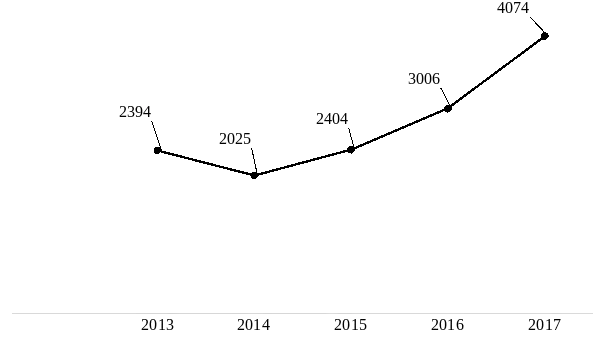
Figure 1. Number of fires from the year of 2013 to 2017 in Vietnam
As can be seen in the graph, the number of fires gradually increased from the year of 2013 to 2017, along with the socio-economic growth, number of fires significantly increased in the year of 2017 with a total of 4,074 fires nationwide.
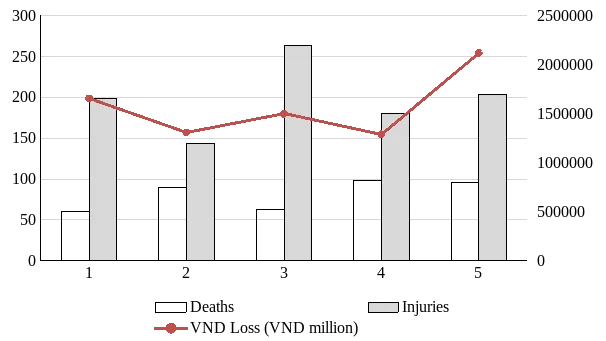
Figure 2. Fire damages from the year of 2013 to 2017 in Vietnam
In
terms of fire losses: the total mortality in fires is 406, 989 people
were injured and the estimated property damaged in fires was
worth
7.871.636 million dong. Each year, there were an averaged
number
of 81,2 people dead and 97,8 people were injured in
fires, losses in property were worth 1.239.174,7 million dong. This
means that every 5 days, there is a Vietnamese person dead by fires.
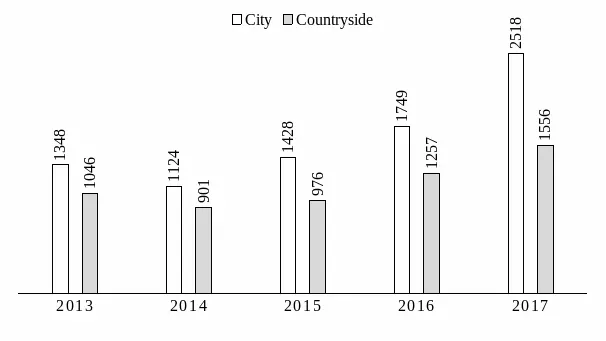
Figure 3. Number of fires by geography from the year of 2013 to 2017 in Vietnam
Regarding the fire geography, the number of fires in urban areas is larger than in rural areas, which rapid urbanization process has led to a great disparity. Within 5 years, total number of fires in the urbans (accounts for 59 %) was always greater than in the rurals (accounts for 41 %).
In terms of serious fires: large fires causing serious losses mainly happened in industrial provinces and cities, which quickly urbanize, develop aspects of society and economy such as Hanoi, Ho Chi Minh City, provinces of Long An, Nghe An, Binh Duong, Hung Yen, Can Tho, etc. The averaged area of serious fire is 2 metre squares, mostly happen at night or beyond working hours.
Forecasted status of fires, explosions in Vietnam in the future
In the following years, fire and explosion circumstances in Vietnam are predicted to continuously increase in quantity and complication.
The author uses 3 short range forecasting methods: forecast via the averaged increase/decrease, forecast via the average growth rate and forecast via the trend function. Based on the Sum of Square Error (SSE) results of the 3 methods, the forecasting method via the trend function shows the most effective results from the smallest SSE result (SSE = 701.889). The forecasting results are:
- the year of 2018: 4,083 fires;
- the year of 2019: 4,517 fires;
- the year of 2020: 4,952 fires;
- the year of 2021: 5,386 fires;
- the year of 2022: 5,820 fires.
It can be seen that in the next 5 years, the annual number of fires would increase with an average growth rate of 1.09.
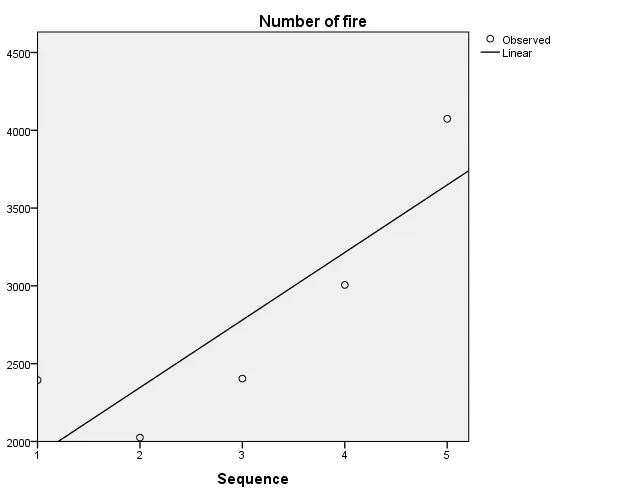
Figure 4: Trend on growing number of fires.
The
Linear Regression Line (Linear) on the graph below shows that
the
trend in number of fires in the next years would increase gradually.
Nowadays, Vietnamese socio-economic status is regenerating and regaining momentum; new and operating manufacturers, businesses and service facilities tend to increase in both quantity and size. Urbanization process continues to increase, new urbans and buildings are built more and more, especially in large cities. The increasing demand of using electricity, fuel and gas power leads to increasing risks of fires and explosions, while the low public awareness in following fire safety rules causes serious fire hazards which might lead to losses in human lives and property… These causes would negatively affect the action of fire fighting, previting and rescue in the future.
References
1. Do Ngoc Can, Fire fighting and prevention statistics // Transportation Publishing House. Hanoi, 2011.
2. Fire Fighting. Prevention and Rescue. Annual Report on the working year of 2013, 2014, 2015, 2016, 2017.