Chemicals for extinguishing fire at solar panel manufacturing facilities
Химикаты для тушения пожаров на предприятиях по производству солнечных панелей
- 1 Академия ГПС МЧС Росиии
- 2 University of Fire Prevention and Fighting, Vietnam
An analysis of the risk of fire and explosion of chemicals at enterprises for the production of solar panels was carried out. The main chemicals used in the production process are considered. The risk of chemical incidents here is very diverse and there are many poten-tial risks, especially fire and explosion. The fire extinguishing mechanism is analyzed and the procedure for using chemicals to extinguish a fire is determined.
Проведён анализ риска возгорания и взрыва химических веществ на предприятиях по производству солнечных панелей. Рассмотрены основные химические вещества, используемые в процессе производства. Риск химических инцидентов здесь очень разнообразен и существует много потенциальных рисков, особенно пожара и взрыва. Проанализирован механизм пожаротушения и определён порядок использования химических веществ для тушения пожара.
1. The role of some chemicals in the solar panel manufacturing process
Solar energy is a clean form of energy, today it is widely used in many countries around the world. The most important device in the system is the solar panel. The chemicals in the solar panel manufacturing process have the following roles:
To obtain pure silicon, people often use silicon dioxide (SiO2) and silane (SiH4), now silane is more commonly used because the process of preparing silicon from silicon dioxide requires the use of carbon to reduce, this process obtains silicon that is less pure than the production of silicon from silane.
To create porosity and increase electron activity, phosphorus (P4) and boron (B) are mixed with silicon wafer
For thin film deposition, Al2O3 dielectric is usually made from trimethyl aluminum (TMA, Al(CH3)3).
To create an anisotropic alkaline texture for the pyramidal monocrystalline silicon layers on the wafer surface, a chemical mixture is used: potassium hydroxide (KOH), isopropanol (IPA, (CH3)2CHOH).
To create texture to isotropic polycrystalline silicon wafers, a mixture of fluorinated hydrogen acid (HF), nitric acid (HNO3) is often used.
The bezel, inner panels, protective, covering and binding materials are typically made of poly ethylene-vinyl acetate (PEVA), butylryl-based resin.
The optoelectronic junction is a material made of metals such as Palladium, Silver, Nickel and Copper.
The most common anti-reflective coating is made from silicon nitride (Si3N4), titanium dioxide (TiO2), because silicon is able to reflect up to 35% of light.
To gather sealed cells together on the back panel of a solar panel. The support structure is usually made of Mylar or Tedlar. Tedlar is a polyvinyl fluoride (PVF) polymer and mylar is an abbreviation for biaxially oriented polyester polyethylene terephthalate (PET) material [3].
2. Fire and explosion hazards of chemicals in solar panel manufacturing facilities
Each stage in the processes of raw material preparation, inventory, manufacturing, packaging, storage of finished products, and transportation can cause chemical problems. In which, the danger of fire and explosion can be noted in the presence of chemicals SiH4, Al2(CH3)6), P4 and (CH3)2CHOH (see table 1) [5].
Table 1
Some dangerous properties of fire, explosion and toxicity of chemicals
Properties |
Silane |
TMA |
Phosphorus |
IPA |
UN code |
2203 |
3051 |
2447 |
1219 |
Danger of fire (NFPA 704) |
4 |
4 |
4 |
3 |
Health effect (NFPA 704) |
1 |
3 |
4 |
1 |
Chemical instability (NFPA 704) |
1 |
3 |
2 |
0 |
Special warning (NFPA 704) |
W |
|||
GHS |
|
|
|
|
Ignition point (C) |
pyrophoric |
Pyrophoric |
31 |
399 |
Flash Point (C) |
112 |
17 |
NI |
11,7-18,3 |
Ignition concentration (%) |
2-98 |
NI |
NI |
2-13,7 |
Standard Elthapy (kJ.mol1) |
34,3 |
136,4 |
0 |
318,7 |
Thermal capacity Cp (J.mol1.K1) |
42,8 |
155,6 |
23,2 |
155,2 |


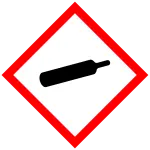


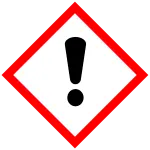

Pyrophoric: Substances with ignition point < 54 C; NI: No information
Chemical reactions on fire:
SiH4(g) + 2O2(g) → SiO2(s) + 2H2O(g); (1)
2Al(CH3)3(ℓ) + 12O2(g) → Al2O3(s) + 6CO2(g) + 9H2O(g); (2)
P4(s) + 5O2(g) → P4O10(g); (3)
C3H8O(ℓ) + 2O2(g) → 3CO2(g) + 4H2O(g). (4)
Substances SiH4, TMA and P4 are very flammable substances in the air; The ignition concentration of SiH4 is only from 2% by volume. In particular, TMA reacts violently with water at normal temperature, forming CH4 which causes fire according to the following reactions [2,4]:
2Al(CH3)3(ℓ) + 3H2O(g) → 6CH4(g) + Al2O3(s); (5)
CH4(g) + 2O2(g) CO2(g) + 2H2O(g); (6)
SiH4 reacts with hot water:
SiH4(g) + 2H2O(g) SiO2(s) + 4H2(g). (7)
When a fire occurs, the fire will grow complex. In terms of thermodynamics, it is shown from table 2 that: The above reactions all give off a large amount of heat, stimulating the combustion of the surrounding combustible substances and the remaining combustibles themselves, and at the same time, the heat radiation causes the fire to spread. Particularly SiH4 in the vapor state, it can spontaneously ignite and explode in the air.
When the temperature of a fire increases (> 600 C), the following reaction will result:
SiH4(g) Si(r) + 2H2(g); (8)
Si(s) + O2(g) SiO2(g). (9)
H2 gas is flammable according to the reaction:
2H2(g) + O2(g) 2H2O(g). (10)
The reactions from (1) to (10) are all exothermic reactions, showing that when a fire has the presence of SiH4 or Al(CH3), it will give off strong thermal radiation and cause the fire to spread easily, because in the fire environment there is water vapor from combustible substances of organic origin [1].
In areas with TiO2, if the fire has the presence of water, water will catalyze with TiO2 to cause decomposition:
H2O(g) 2H2(g) + O2(g). (11)
When the (11) reaction occurs, it will release H2 and O2, making the fire worse.
In the manufacturing process, additives such as bytyryl, PEVA, PET, PVF are also substances with a fire hazard. Therefore, at solar panel manufacturing facilities, the risk of fire and explosion is very diverse, due to the presence of pyrophoric substances.
Table 2
Thermodynamic parameters of chemical reactions
Reaction |
|
Reaction |
|
(1) |
– 1428,82 |
(6) |
– 802,3 |
(2) |
– 6070,92 |
(7) |
– 461,5 |
(3) |
– 2984,0 |
(8) |
– 34,3 |
(4) |
– 1829,15 |
(9) |
– 910,86 |
(5) |
– 1120,72 |
(10) |
– 483,66 |
 (kJ)
3. Chemicals for extinguishing fire
For common combustible substances such as bytyryl, PEVA, PET, PVF, chemicals can be used initially as powders (NH4)3PO4 (ABC); NaHCO3 (BC), CO2, foam, water are not recommended.
For P4 chemicals, we can use ABC, BC, CO2, foam and even water to extinguish the fire, however, it is not recommended to spray water directly at the chemical storage location, to avoid chemical release. It is recommended to use the irrigation technique combined with indirect spraying on the ceiling of the burning warehouse.
For TMA fires: it is necessary to move unburnt parts and potentially combustible substances around the fire to a safe area to isolate the fire, absolutely do not use fire extinguishing chemicals containing water, fire extinguishing chemicals such as CO2, BC or ABC also do not have much effect. Although in principle CO2 can have an extinguishing effect, but due to the high temperature of the fire, the formation of hot soot will occur, so CO2 will not be effective in this case. The recommended chemical for extinguishing TMA fires must be powder D, NaCl or an inert gas such as Ar, Ne, and He. However, we recommend an additional fire extinguishing method that is to use cement as a fire extinguishing chemical in this case, because it does not contain water and is based on metal oxides, has the ability to form a coating, which has the effect of isolating TMA from O2.
For silane fires: sand, anhydrous NaCl or highpressure CO2 should be used to extinguish the fire. When a fire breaks out, if possible, move silane-containing steel cylinders out of the danger area, then spray water around and try to cool them down to avoid an explosion. If a gas leak is detected, the air valves should be closed promptly. After the fire is completely extinguished, it is necessary to carefully inspect the air valves, ensure that there is no gas leakage, avoiding the case of gas leakage causing re-ignition. Water and water-based chemicals are not permitted for silane fires.
People participating in fire fighting and rescue need to use oxygen masks and heat-resistant clothing to protect their bodies from heat radiation, poisoning and dust exposure. Both P4, TMA and SiH4 are toxic substances.
References
1. Chen, J. R.; Tsai, H. Y.; Chen, S. K.;
Pan, H. R.; Hu, S. C.; Shen, C. C.;
Kuan, C. M.; Lee, Y. C. &
Wu, C. C. (2006). Analysis of a silane
explosion in a photovoltaic fabrication plant. Process
Safety Progress 25 (3):
237–244. https://doi.org/10.1002/prs.10136
2. Krause, Michael J.; Orlandi, Frank; Saurage, Alfred T.; Zietz, Joseph R. (2000). Aluminum Compounds, Organic. Ullmann's Encyclopedia of Industrial Chemistry. Weinheim: Wiley-VCH. https://doi.org/10.1002/14356007.a01_543
3. K. Birmann, M. Zimmer, J. Rentsch, Fast alkaline etching of monocrystalline wafers in KOH/CHX, Proc. of the 23rd European Photovoltaic Solar Energy Conf. and Exhibition, 2008, Valencia, Spain.
4. Krause, Michael J.; Orlandi, Frank; Saurage, Alfred T.; Zietz, Joseph R, Aluminum Compounds, Organic. Ullmann's Encyclopedia of Industrial Chemistry. Weinheim: Wiley-VCH, 2000, https://doi.org/10.1002/14356007.a01_543.
5. U.S. Department of Transportation, Transport Canada, and Secretariat of Communications and Transport of Mexico, with collaboration from Argentina's Centro de Información Química para Emergencias. 2020 Emergency Response Guidebook. https://www.phmsa.dot.gov/hazmat/